
I appreciate GSTC’s critical perspective published on its website with the title «The Difference Between Regenerative Tourism and Sustainable Tourism«, which invites necessary dialogue.
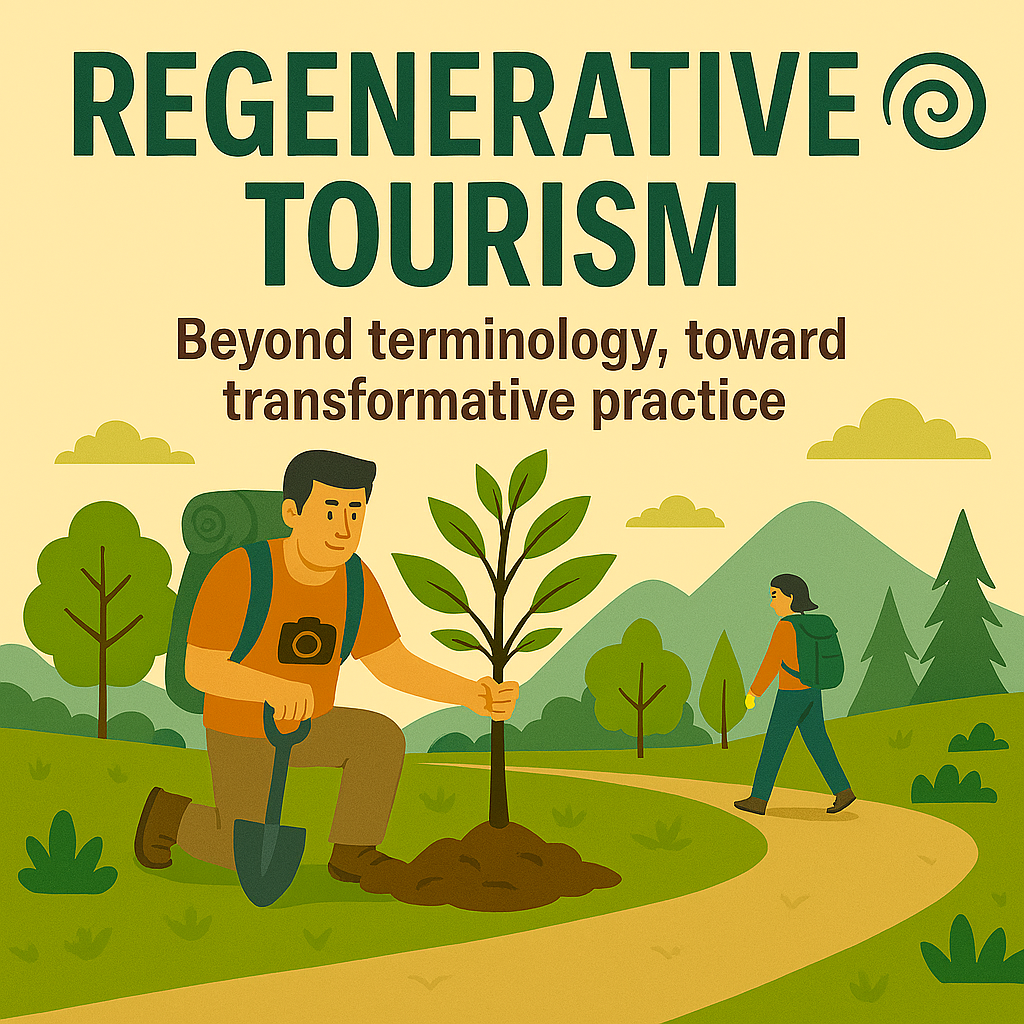
However, the regenerative tourism movement addresses deeper systemic issues that sustainability frameworks, despite their value, have struggled to resolve.
After years working within sustainability paradigms, ecological and social indicators have not improved as expected. With only six years remaining to implement the 2030 Agenda for Sustainable Development, the world is on track to achieve only 17 per cent of targets (UN General Assembly, 2024), with progress towards over one third of the targets having stalled or even regressed. Regeneration transcends sustainability by not only maintaining existing systems but promoting continuous improvement and adaptation to changing circumstances.

The fundamental distinction lies in paradigm shift, not semantics. Regeneration questions the premises of industrial growth society, recognizing actions’ interdependence with all life on Earth. While sustainability focuses on maintaining current systems without damaging them, regeneration seeks to improve those systems, promoting constant renewal to adapt to new circumstances and prosper long-term.

Regarding practical application, regenerative tourism offers an alternative approach: it operates through systemic reading of places, promotes relationships between inhabitants, visitors, and local ecosystems, creates conditions favoring all life forms, and includes prevention, mitigation, compensation and conservation actions. Through participatory research and action, it generates collective knowledge with local actors, involving them in both diagnosis and change proposals.

Regeneration approaches development differently—not as damage mitigation, but as creating positive impact through action itself. This represents not merely inspirational language, but a fundamental reorientation: from extractive tourism models toward ecosystems that redistribute benefits, strengthen local identity, and regenerate bonds between people, cultures and nature in order to reflorish destinations.
Manuel Miroglio, Professor, Trainer and international speaker specialized in Regenerative Tourism IGTR Member (Global Iniciative for Regenerative Tourism)
 Manuel Miroglio, Profesor, Conferencista, Capacitador, Coach especializado en Turismo Regenerativo